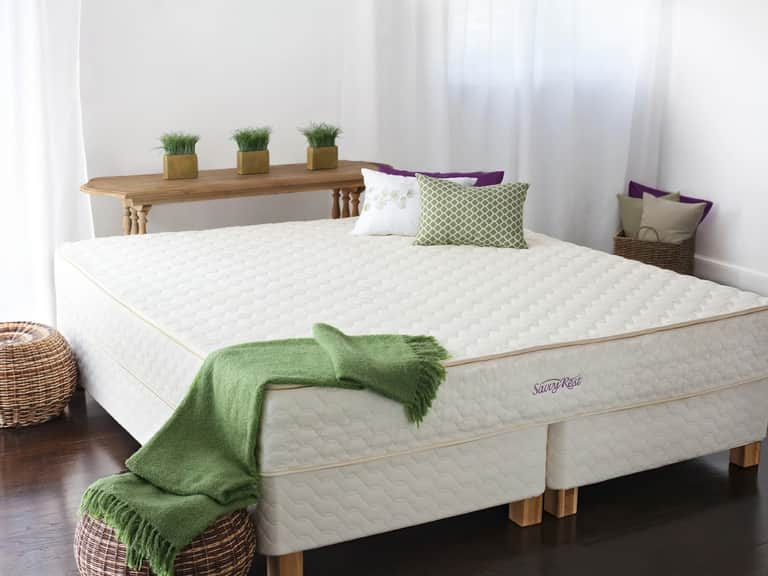
Bedding Care Guide
Encasements, Pads, and Everyday Care: A Guide to Bedding Protection
The layers between you and a mattress do more than soften a bed. A protector can help guard against spills and everyday wear; a pad can add cushioning; and a zippered encasement can surround the mattress on every side. Choosing well means matching the layer to the job, then caring for it in a way that preserves its fit, feel, and usefulness.
A bed is a small landscape of fabrics and materials, shaped night after night by warmth, moisture, movement, and routine. Sheets are changed, blankets aired, and mattresses usually left in place for years. Bedding protection helps manage what accumulates between those tasks. But the words used for these layers can be confusing: a pad, a protector, and an encasement may all sit beneath the fitted sheet, yet they are not interchangeable.
The most useful starting point is not a particular material or marketing claim. It is the question of what you want the layer to do. Are you trying to reduce the risk of liquid reaching the mattress? Add a little loft? Create a barrier around the whole mattress? Or simply make routine cleaning easier? Once the purpose is clear, construction, fabric, fit, and care instructions become easier to compare.
Three layers, three different jobs
Although product names sometimes overlap, bedding protection generally falls into three practical groups. A fitted mattress protector is usually a relatively thin layer intended to shield the mattress from everyday exposure. A mattress pad often adds some cushioning as well as a degree of protection. A full encasement wraps around the mattress, closing with a zipper to cover the top, sides, and bottom.
Fitted protectors: a light, close-fitting barrier
A fitted protector resembles a fitted sheet or may use elastic straps at the corners. Many are designed to be unobtrusive beneath ordinary bedding, preserving most of the mattress’s original feel. Depending on its construction, it may offer a water-resistant or waterproof layer, help limit contact with dust and spills, or simply provide a washable surface between the sleeper and the mattress.
The word “protector” alone does not tell you how much liquid a product can block. Check the maker’s description for the specific protection offered and for any limits on use or care. A breathable fabric surface may feel different from a more substantial waterproof layer, and a barrier that sounds ideal on paper is of little help if it makes the bed uncomfortable or does not fit securely.
Mattress pads: cushioning with everyday coverage
A mattress pad usually has more loft than a thin protector. Its fill and quilted construction can soften the surface, smooth minor variations in feel, or provide a modest layer of cushioning. Some pads are made primarily for comfort; others also offer a protective function. Always distinguish between those aims rather than assuming that a thick pad is automatically waterproof.
A pad can be a useful option when the mattress remains comfortable and supportive but the sleeping surface feels a little firm or bare. It is not a fix for a sagging mattress or a substitute for the support a mattress should provide. Added padding changes the immediate feel of the bed, but it cannot restore a worn-out foundation or correct a structural problem beneath the surface.
Zippered encasements: coverage on every side
An encasement surrounds the mattress rather than resting only on its upper face. Most use a zipper that closes the fabric around the mattress, creating full coverage across the top, sides, and underside. Some are designed with a waterproof membrane; others focus on fabric coverage and a close-fitting enclosure. The product specifications matter: “encasement” describes the shape and coverage, not necessarily a particular level of liquid protection.
This all-around design can suit households looking for a more complete barrier than a fitted layer provides. It can also take more effort to put on and remove, especially on a large or heavy mattress. If a mattress is already dressed with a pad or protector, check whether the encasement can still close without strain. For a secure fit, the mattress dimensions and the encasement’s pocket depth must be compatible.
Start with the exposure you want to manage
The purpose of bedding protection varies from home to home. A household with young children may prioritize liquid resistance and easy laundering. Someone caring for an older adult may value a washable layer that can be removed promptly after an accident. A pet owner may want a barrier against fur, dirt, or occasional moisture. Another sleeper may be less concerned with spills and more interested in keeping a mattress clean through years of regular use.
Think about the situations that actually occur, not every possibility mentioned on a product label. A waterproof layer may be sensible where spills are a likely concern, but it may not be necessary for every bed. A full encasement provides broader coverage, yet may feel more involved to install and maintain. A cushioned pad can add comfort, but may not supply the specific barrier needed for liquid protection.
It is also helpful to consider who will handle the care. A protector that must be removed, washed, and dried after a spill is only practical if those tasks are manageable. A product that fits neatly and can be washed according to clear instructions is more likely to become part of a sustainable household routine.
Materials: read beyond the label
Fabric composition affects touch, airflow, stretch, weight, and cleaning requirements. Cotton is widely used for its familiar hand and breathability, while cotton jersey has a knit structure that can stretch around a mattress. Polyester and blended fabrics may be selected for durability, easy care, or particular surface textures. Wool and silk appear in some bedding layers, typically as natural fills that contribute cushioning or moisture management. No single material is best for every sleeper or household.
Waterproof layers commonly use a thin membrane beneath a textile surface. The fabric people feel is not necessarily the barrier itself, so look for an explanation of the full construction. Product descriptions may identify the membrane material, whether it is intended to block liquid, and how the surface is expected to feel. If details are unclear, avoid inferring performance from words such as “natural,” “breathable,” or “protective” alone.
For people who prefer organic cotton bedding, certification language can help clarify what is being claimed. Read the specific certification and scope rather than treating “organic” as a complete description of the finished product. A fabric’s source, processing, backing, stitching, and care instructions all contribute to the experience of using it. Certifications can be useful context, but they do not replace checking the product’s construction and intended function.
Fit is a performance feature
A bedding layer that slips, bunches, or strains at the corners can interrupt sleep and complicate care. Before choosing, measure the mattress length, width, and depth. Include any pillow-top or built-in quilting in the depth measurement. If the bed includes a thick topper, check whether the protector or encasement is designed to fit over the combined height rather than the mattress alone.
Pocket depth describes how far the fitted edge can extend down the sides of the mattress. Compare that number with the mattress depth and allow for the fabric and elastic to wrap without being pulled tight. An encasement also needs enough room to close comfortably around the mattress. A zipper that must be forced shut may be under unnecessary tension, while a loose fitted protector may shift as the sleeper moves.
Adjustable beds call for an additional check. A protector or pad may need to stretch and move with the mattress as it bends. A layer that is too rigid, too small, or secured in a way that restricts movement can pull out of position. Check the manufacturer’s compatibility notes and, after fitting, raise and lower the bed to confirm that the layer remains smooth.
If a product is made from cotton, the care label may mention shrinkage. Follow any pre-washing guidance before relying on the final fit, and use the recommended water temperature and drying method. Fabric that becomes tighter after washing can be difficult to stretch over deep mattresses, so care instructions are part of the fit decision, not an afterthought.
Comfort, temperature, and the feel of the bed
Every layer placed between a sleeper and a mattress can change how the bed feels. A thin knit protector may be nearly invisible beneath a sheet, while a quilted pad can add softness and a more cushioned surface. A membrane-backed protector may feel different from an unbacked cotton layer, depending on its thickness, construction, and the sheet used above it.
Temperature is personal and depends on more than one textile. Room conditions, sleepwear, sheets, blankets, mattress materials, and individual physiology all play a role. A breathable cover may feel more comfortable to one sleeper, while another may prefer a warmer, loftier pad. If temperature comfort matters, look for specific construction details and consider whether a removable layer gives you flexibility across seasons.
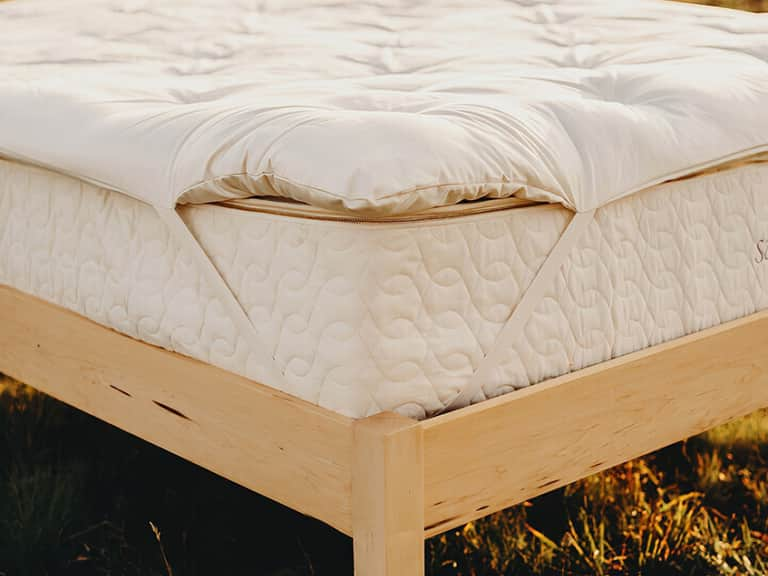
A topper is different from a pad, even when both add softness. Toppers are generally thicker and intended to make a more noticeable change to the sleep surface. They may be secured with straps or simply placed on the mattress. Because a topper can be harder to wash than a thin pad, a washable protective layer over it may help keep routine care manageable. Confirm that the layers fit together without bunching or sliding.
Everyday care begins with the label
Care instructions vary by material and construction. Before washing a new protector or pad, check whether the maker recommends pre-washing, a particular cycle, a detergent type, or low-heat drying. Do not assume that every waterproof layer can tolerate high heat, bleach, or fabric softener. Those treatments may affect materials or coatings, and the product’s own instructions are the safest guide.
For routine upkeep, remove sheets regularly and allow the bed to air when practical. This gives moisture from ordinary use a chance to disperse before the mattress is covered again. Wash the protective layer at the interval appropriate for your household and the manufacturer’s guidance. If a spill or accident occurs, act promptly: remove the bedding, follow the label’s cleaning instructions, and ensure the mattress surface is fully dry before replacing the layers.
A mattress encasement may not need frequent removal if it remains clean and dry, but it should still be inspected from time to time. Check seams, zipper closure, elastic, and the fabric surface for damage or signs of wear. If the enclosure is removed for washing, allow the mattress and the encasement to dry completely before putting everything back together. Trapped moisture can create an unpleasant environment and may undermine the purpose of a clean, dry bed.
A simple cleaning routine
- Read the care label first. Follow the stated washing temperature, cycle, detergent guidance, and drying method.
- Handle spills promptly. Remove sheets and protective layers as needed, and clean each material according to its instructions.
- Dry thoroughly. Make sure the protector, pad, or encasement is fully dry before returning it to the bed.
- Inspect the fit and seams. Look for stretched elastic, damaged fabric, compromised waterproof backing, or a zipper that no longer closes smoothly.
- Avoid unapproved treatments. Bleach, high heat, and fabric softener can be unsuitable for some materials and coatings.
- Keep instructions accessible. Save the label or product care information so household members can follow the same routine.
What protection can—and cannot—do
Bedding protection can make routine maintenance easier and reduce the chance that common spills reach the mattress, when the product is designed for that purpose and used as instructed. It can also provide a washable surface that stands between the sleeper and the mattress. An encasement can cover more of the mattress than a fitted protector, while a pad can add cushioning. These are useful functions, but none makes a bed maintenance-free.
A product’s claims should be interpreted narrowly. “Water-resistant” and “waterproof” may describe different levels of barrier performance. A dust barrier is not automatically a liquid barrier, and a quilted pad is not necessarily a mattress protector. Likewise, a fitted protector does not provide the same all-around coverage as a zippered encasement. Matching the product to the stated need is more reliable than relying on a broad label.
Bedding layers are also not a substitute for medical advice or professional treatment when a household is dealing with a health concern, an infestation, or persistent moisture problems. In those situations, follow advice from qualified professionals and the product’s instructions. Protection is one element of a clean sleep environment, alongside ventilation, regular laundering, and appropriate care of the mattress and bedroom.
A practical way to choose
The decision can be made by working through a few questions in order. First, identify the main concern: spills, everyday wear, a desire for added cushioning, or broader coverage. Second, decide whether a waterproof layer is necessary. Third, choose between a fitted protector, a pad, or a zippered encasement based on the coverage and feel you want. Finally, verify that the product fits the bed and can be cared for with the time and equipment available at home.
Quick comparison
- Choose a fitted protector when you want a relatively thin, easy-to-remove layer and have confirmed whether it is water-resistant or waterproof.
- Choose a mattress pad when modest cushioning is a priority, while checking separately what level of protection it provides.
- Choose an encasement when you want the mattress covered on all sides and are comfortable with the added effort of fitting and removing a zippered layer.
- Check all three options for mattress depth, materials, washing instructions, and compatibility with an adjustable base or topper.
Layering without making care harder
Some beds use more than one protective layer: an encasement around the mattress and a fitted protector or pad above it, for example. This can be practical when the layers have distinct roles, such as full coverage below and a frequently washable surface above. But adding layers without a clear purpose can make the bed warmer, bulkier, or more complicated to maintain.
If you layer, check the order recommended by the manufacturers. Make sure the top layer fits over everything beneath it and does not pull at the corners. Consider which component is likely to need washing most often and make that one easy to remove. A thoughtful setup should simplify care rather than turn each sheet change into a major task.
The quiet value of a good fit
Bedding protection is most successful when it becomes almost invisible to daily life: it stays in place, feels comfortable beneath the sheet, and can be cleaned without guesswork. That outcome depends less on one universally ideal fabric than on a match between household needs and product design. A lightweight fitted protector, a cushioned pad, and a zippered encasement each answer a different question.
Measure before buying, read beyond the product name, and treat care instructions as part of the decision. A protective layer that fits the mattress, suits the sleeper, and can be washed correctly is more likely to serve its purpose over time. In a room organized around rest, this modest layer of planning can make the bed easier to care for—and help the mattress remain a dependable part of the sleep environment.
Frequently asked questions
Is a mattress pad the same as a mattress protector?
Not necessarily. A mattress pad commonly adds cushioning, while a protector is generally selected for its barrier function. Some products combine both, but the name alone does not confirm whether a pad is waterproof. Check the construction and stated protection level.
Does a mattress encasement have to be waterproof?
No. Encasement refers to a design that covers the mattress on all sides, usually with a zipper. Some encasements include a waterproof barrier, while others do not. Confirm the product specifications if liquid protection is important.
How can I tell whether a protector will fit?
Measure the mattress length, width, and depth, including a built-in pillow top. Compare those measurements with the product’s stated size and pocket depth. If you use a topper, check whether it is meant to sit beneath or above the protective layer and account for its height.
Can I wash a waterproof protector in hot water?
Only if its care instructions allow it. Heat and some cleaning products may be unsuitable for particular fabrics or membranes. Follow the manufacturer’s instructions for washing and drying rather than assuming all waterproof protectors share the same care requirements.
Will a pad improve a mattress that has begun to sag?
A pad may change the surface feel, but it cannot restore the underlying support of a sagging mattress. If the mattress has a pronounced dip or structural damage, a soft layer is unlikely to correct the cause.
A final checklist
- Identify the main purpose: coverage, liquid resistance, extra cushioning, or full enclosure.
- Confirm whether the item is water-resistant, waterproof, or not intended to block liquids.
- Check fabric composition, backing, and any certification claims that matter to your household.
- Measure mattress depth and account for toppers, pillow tops, and adjustable-bed movement.
- Read washing and drying instructions before purchase.
- Choose a layer that is comfortable enough to use consistently and practical enough to maintain.